The images come from a version currently in development.
Lost in the Big Apple
If you have had the opportunity to take the free demo available, know that this is only a small taste of what Pragmata really offers. It allows you to discover the gameplay mixing action and hacking, but without really measuring the structure, rhythm and progression offered by this new license.
Although the idea immediately appealed to us, there were still major concerns about the renewal of the mechanics over time. This handling of around three hours on PlayStation 5, however, reassured us about the potential of the game. In a single-player video game landscape today largely dominated by open worlds, Souls-like and RPGs, Pragmata on the contrary offers an “old-fashioned” structure, with a particularly refreshing action-adventure game.
We started this new approach in the HUB of the lunar station, in the company of Hugh and Diana, the duo of protagonists. It is to this base that we return after each mission in order to improve our abilities, our arsenal or even enjoy friendly moments with the characters. We then progressed into a new section of the station taking the form of an almost identically reconstructed New York.
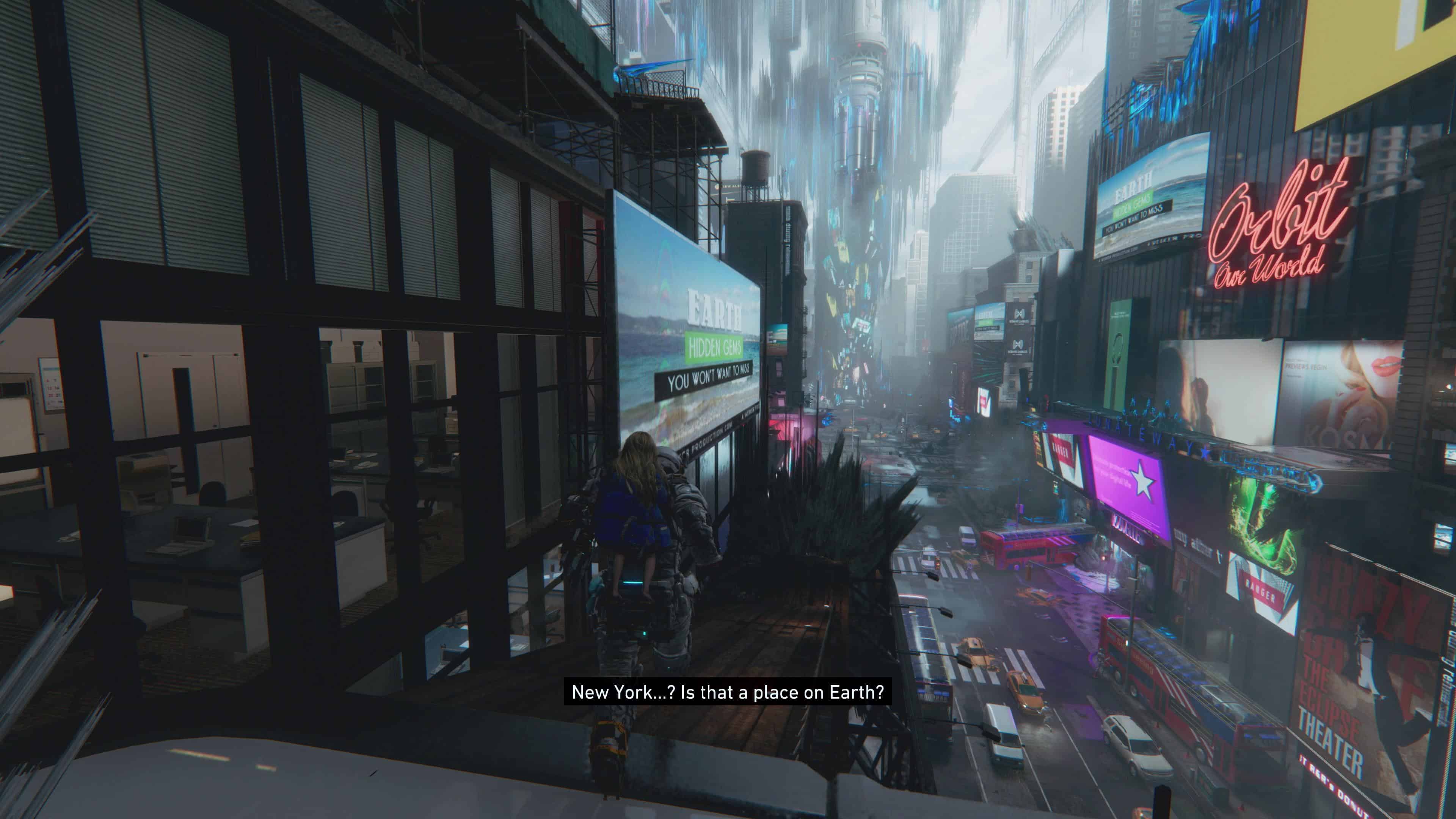
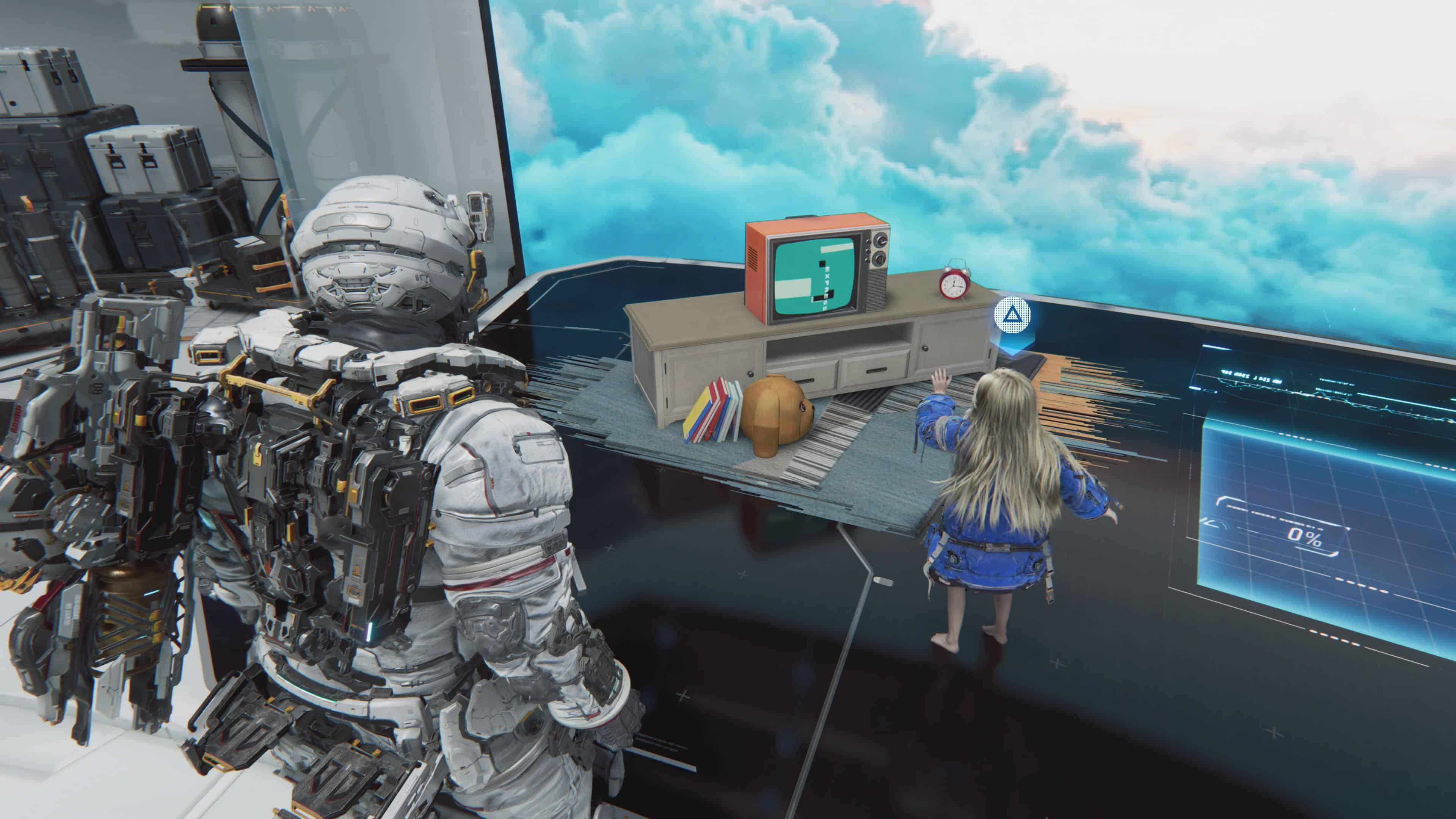
Pragmata’s story takes place in the near future where humanity has discovered a phenomenal resource called lunum. Using this raw material, scientists have developed lunafiber, a material capable of reproducing any object provided they have the data. We now know a little more about the game’s universe and its storyline. If the whole thing still remains quite mysterious, the plot is for the moment part of a relatively classic, but effective, science fiction.
The duo’s dynamic also constitutes a textbook case of science fiction, with a strong dimension of transhumanism exploring the boundary between human and machine. Diana is an android who is both mysterious and very competent, but who also has the soul of a child discovering the world. Hugh thus takes on the role of improvised tutor who seems to gradually evolve into a sort of father figure.
Walking the streets of this recreated Times Square is often an opportunity to witness a new curiosity of Diana’s, which Hugh tries to explain with more or less success. The duo quickly becomes endearing and brings a little life to this empty and hostile station. We were also able to play with the French dubbing and, although it seems to be of good quality overall, we still have a little trouble with Diana’s performance compared to the English and Japanese voices. To be confirmed during the test.
Mars at-hack
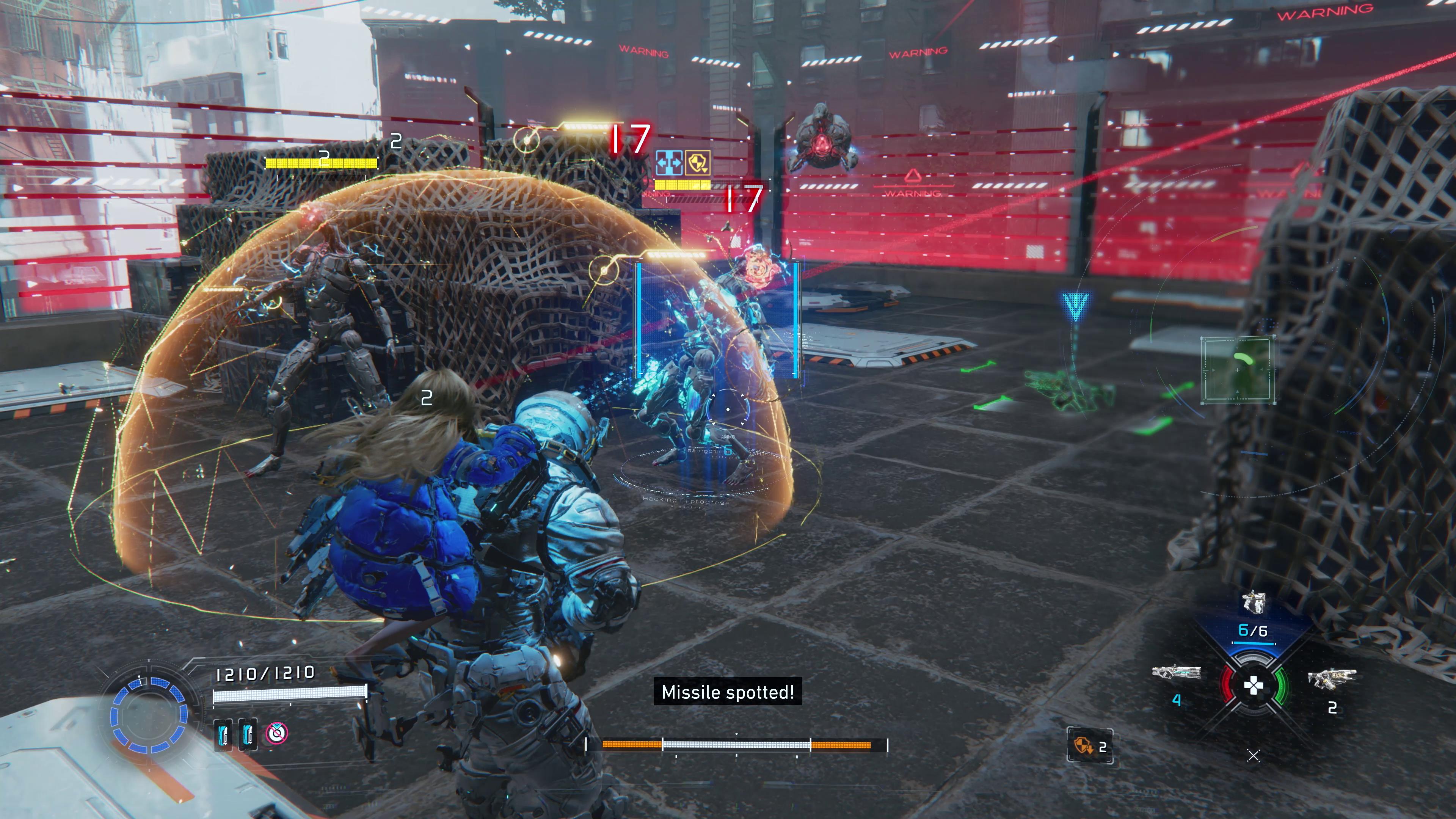
In its game structure, Pragmata is quite close to titles like God of War Ragnarök or Star Wars Jedi: Fallen Order. Understand by this that we access different sections of the station which take the form of semi-open environments. If the beginnings are quite linear, we then unlocked a new ability for Diana allowing us to open certain previously blocked passages, which introduces some metroidvania elements. We also find mechanics borrowed from Souls-like, that of enemies which reappear in the event of death or when returning to the HUB or that relating to healing.
Aside from these similarities, Pragmata is not at all a Souls-like hacking sauce. We remain in a demanding, but relatively accessible action gameplay. As a reminder, Hugh plays the role of strike force thanks to his arsenal and his movements powered by his suit, while Diana weakens opponents via hacking.
This hack takes the form of a panel that appears in real time on the screen to weaken the target. The objective is to move the cursor to a specific destination in order to complete the hacking phase, while avoiding obstacles and collecting bonus boxes which grant different effects.
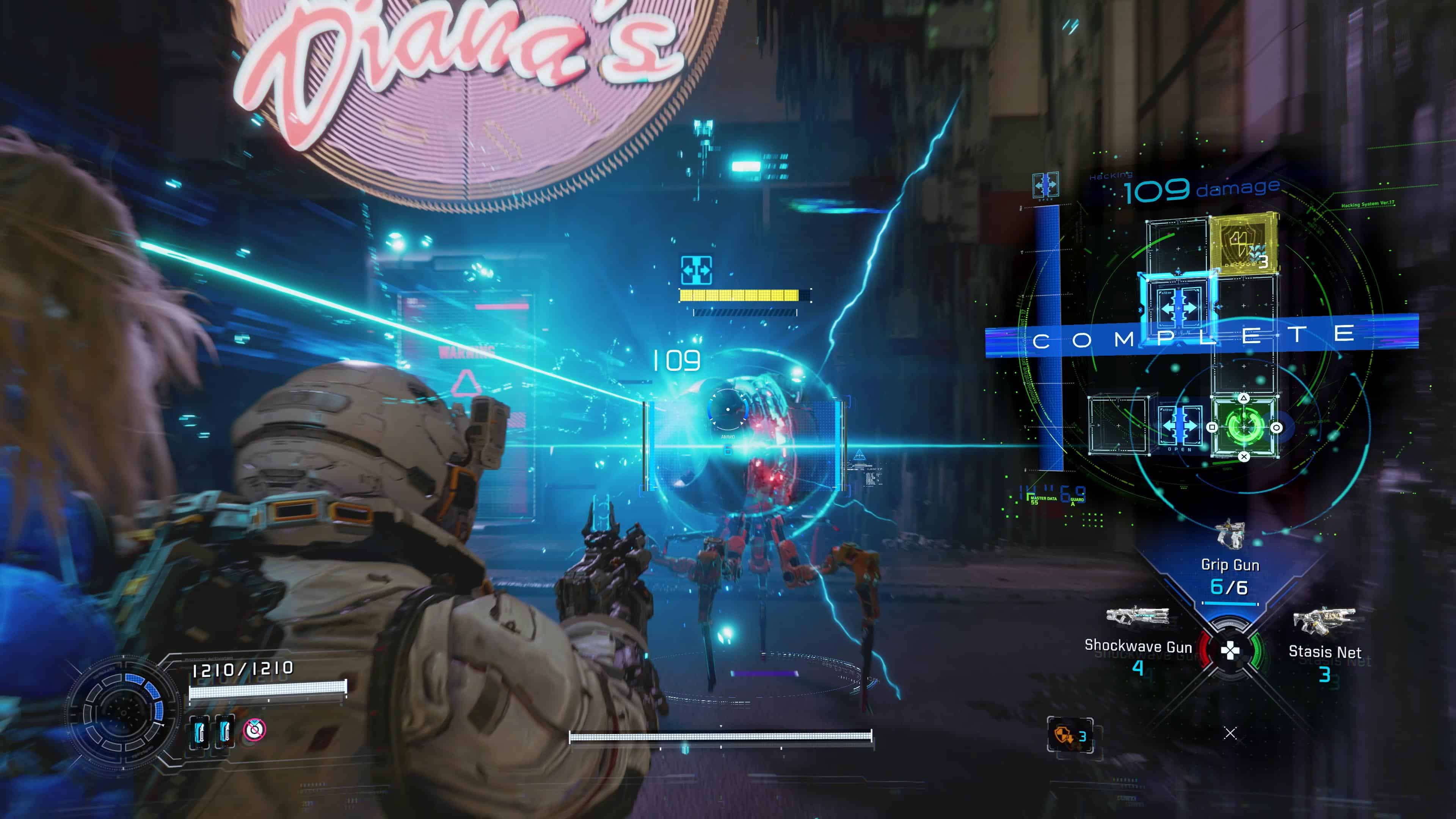
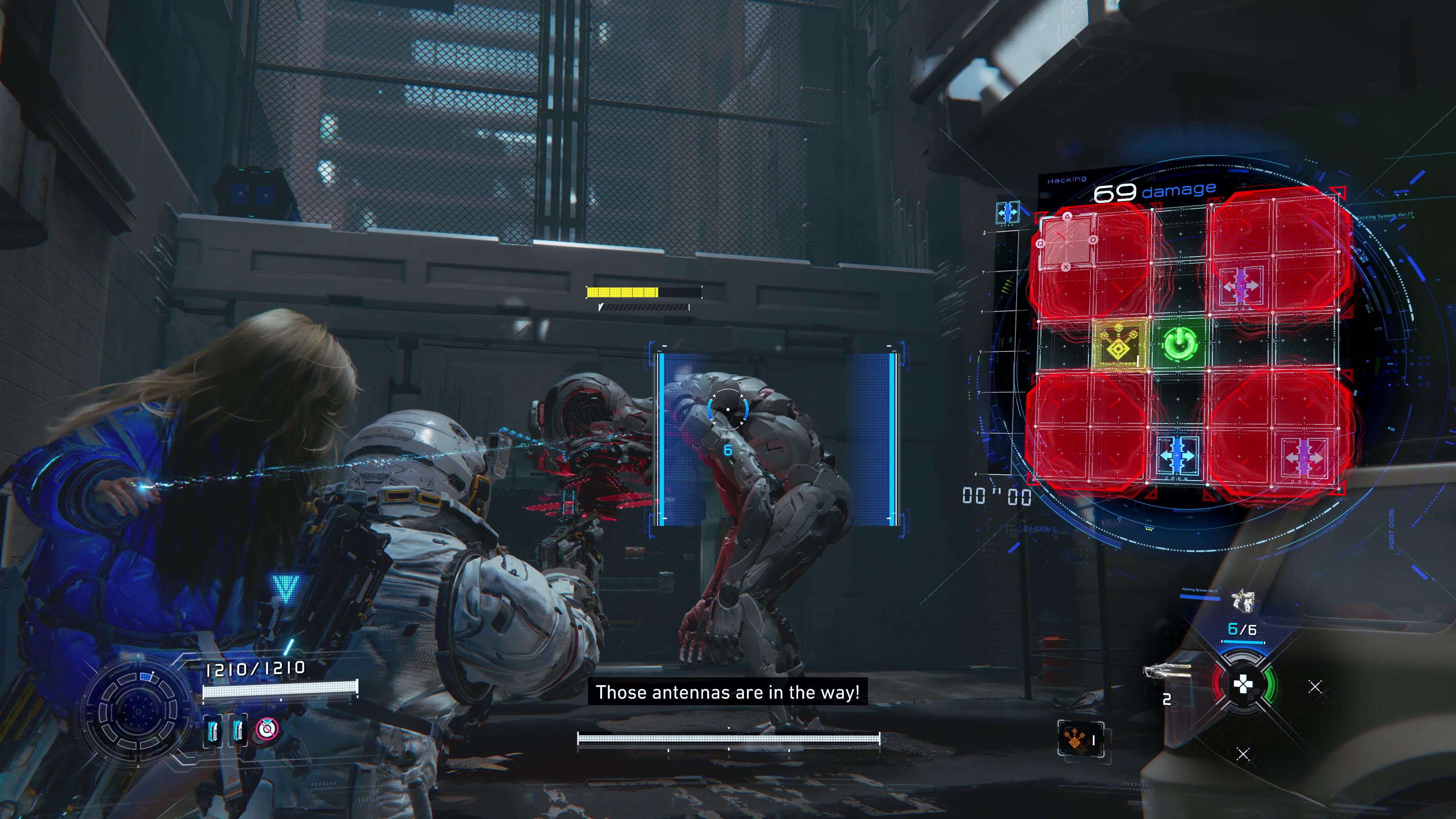
If the handling remains quite simple at the beginning, with two or three enemies to manage simultaneously, the situation quickly becomes complicated with the increase in the number and variety of adversaries. The bestiary also seems quite substantial given that each enemy robot has its own characteristics and patterns to memorize. Some are slow but powerful, others are flying projectile drones, while some more dangerous models are particularly aggressive. During a hack, the enemy becomes more vulnerable and reveals a weak point that must be targeted as a priority to eliminate it more effectively.
Pragmata thus quickly gains in intensity, requiring more rigorous crowd management, rapid execution of hacks and careful observation of enemy formations. The game quickly shows that it is impossible to attack without thinking. You often have to use Hugh’s arsenal (like the stasis weapon which creates a small slowing dome) to temporarily neutralize one or more enemies in order to concentrate on the others. The task is all the more complicated as the battlefields are often quite narrow, which further reinforces the intense nature of the clashes.
“Lady D-ia”
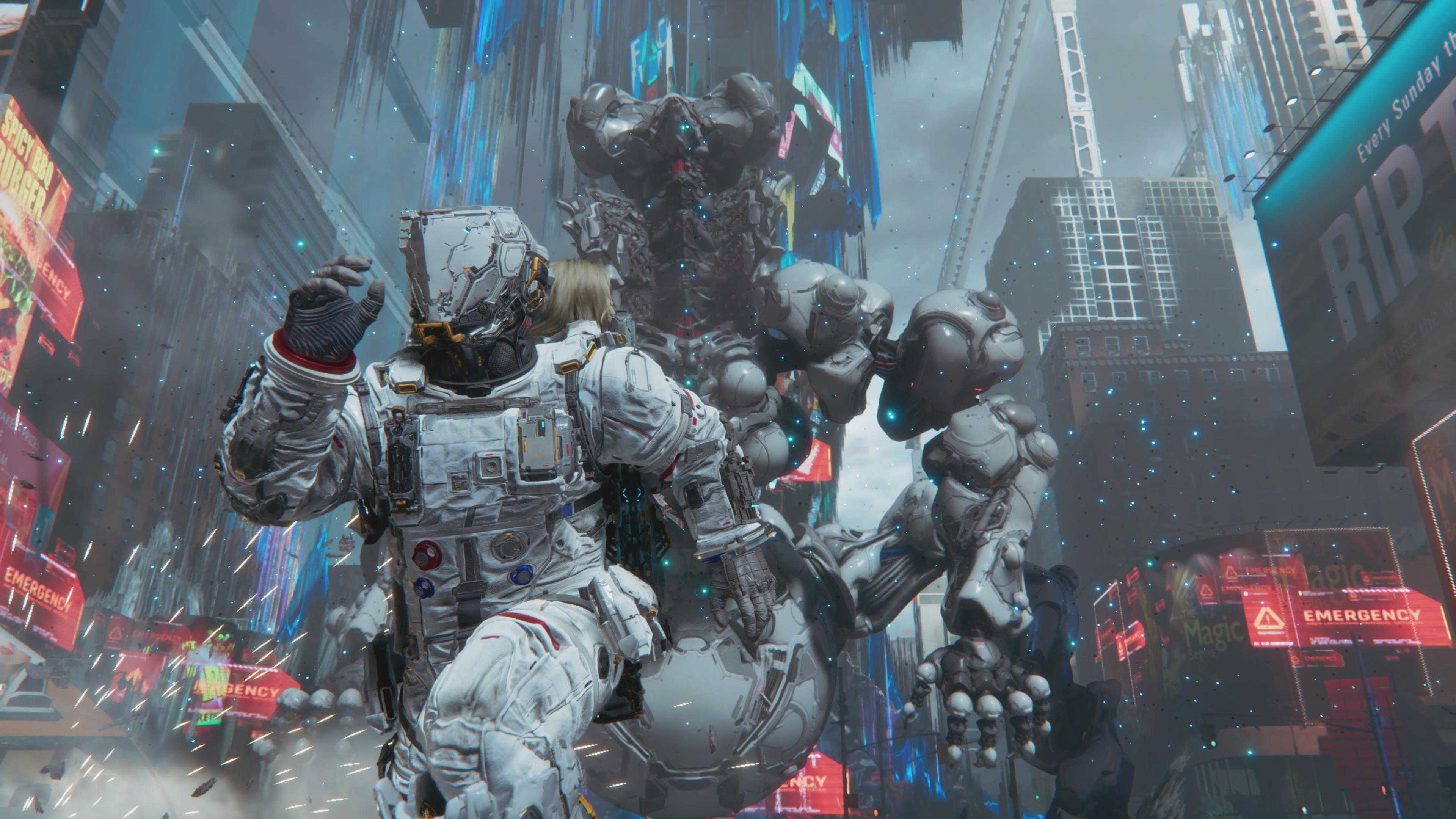
Even if death can seem quite punitive at first, returning to the HUB allows us to strengthen our protagonists thanks to the many elements that can be found in the environments. Indeed, even if Pragmata primarily offers tense confrontations, it also rewards in-depth exploration which allows you to recover improvement materials, but also to discover some nods to the Capcom universe, like this poster of “Resident Devil” seen in a cafe.
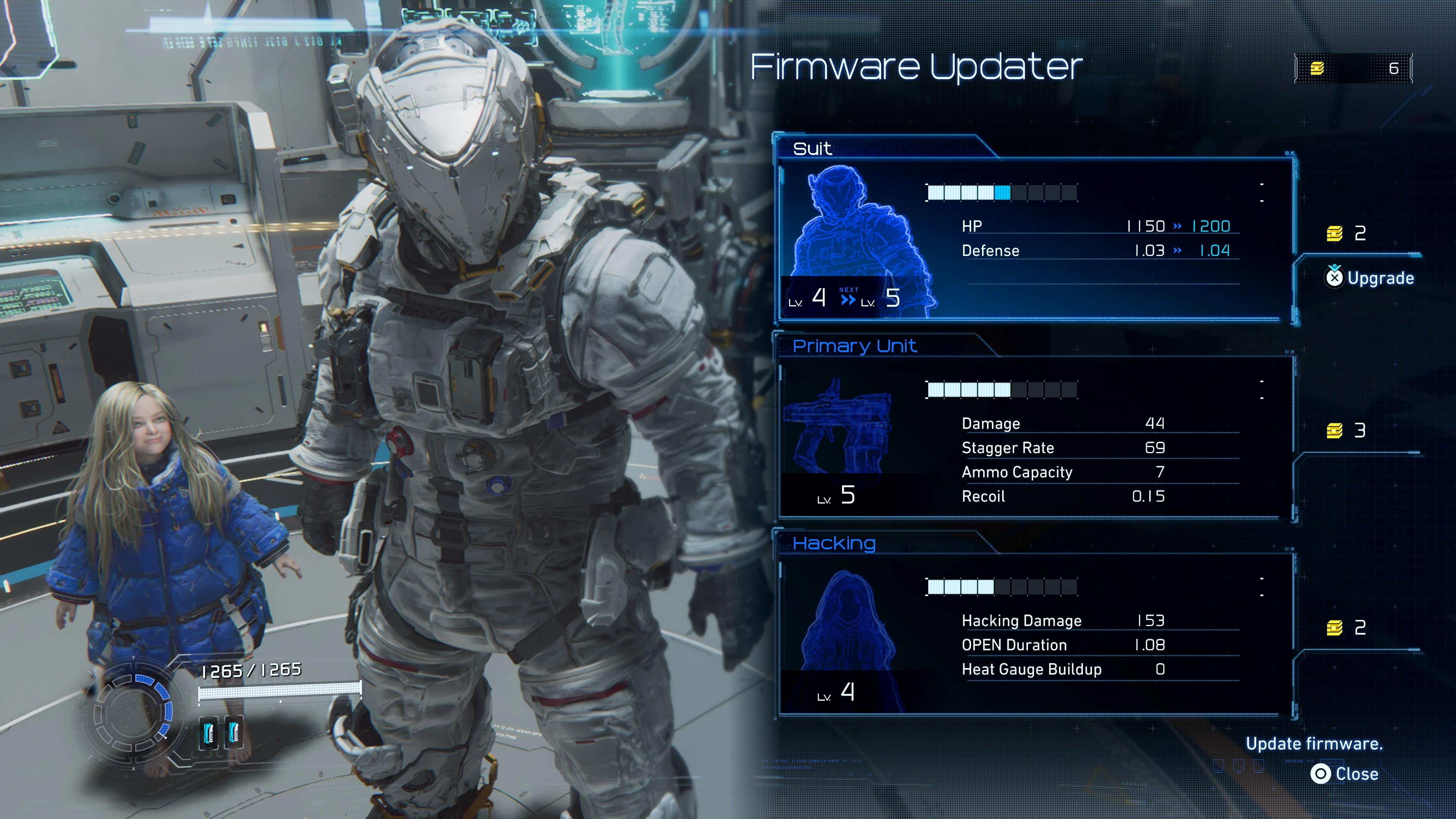
Thanks to the resources collected, you will be able to increase your life points, your defense or even the damage linked to hacking. They are also used to craft and improve your weapons. Thus, after a defeat, it is possible to come back better prepared and equip yourself according to the challenge to be taken on. You can also configure bonus hack boxes according to your needs, such as enemy defense reduction or even multi-hacking.
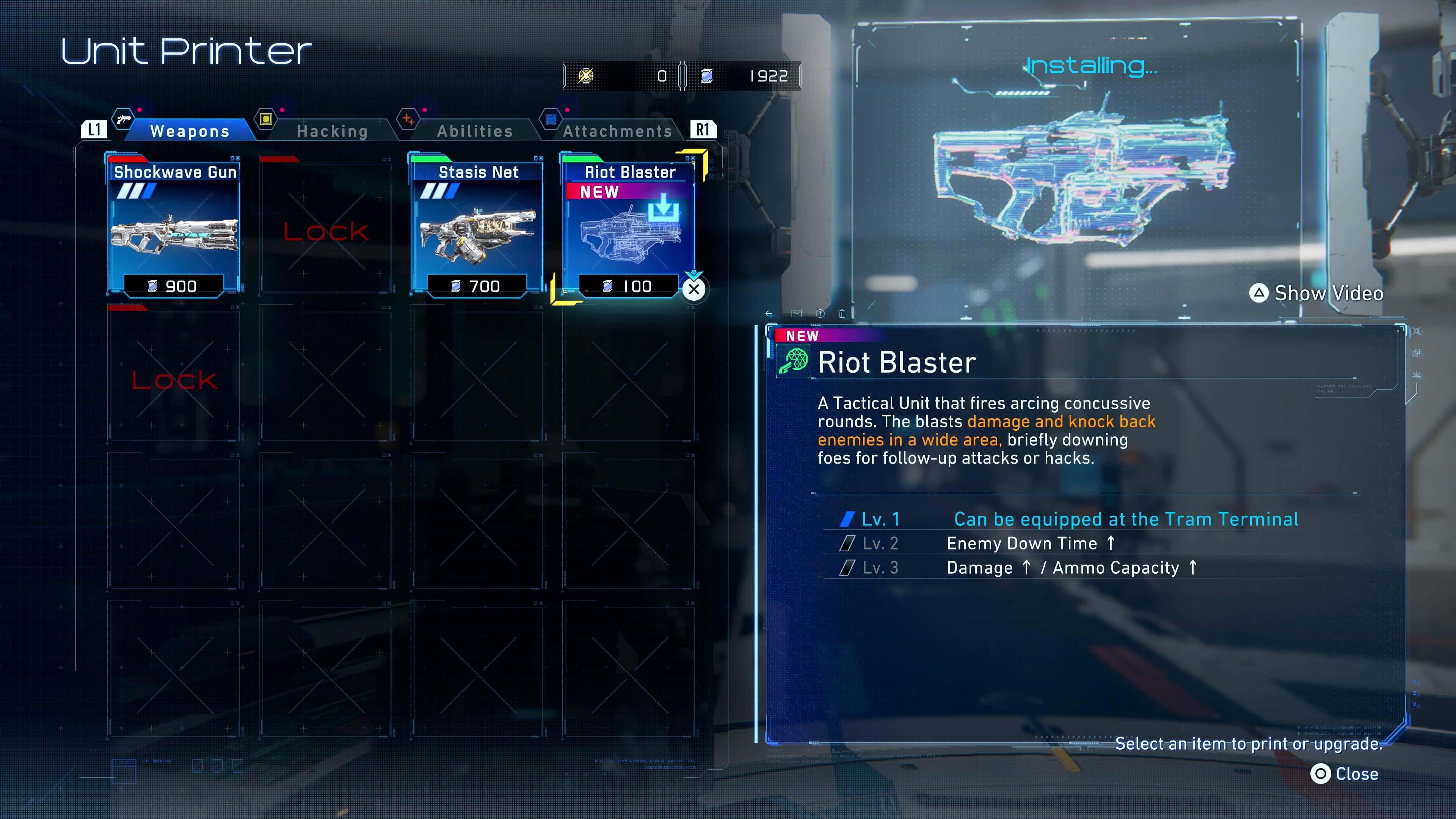
The gameplay loop is overall very satisfactory, but we still have some reservations regarding the ammunition system. Apart from Hugh’s basic weapon, which recharges over time, it is necessary to collect other weapons in the setting once the ammunition is exhausted. We sometimes find ourselves going in circles looking for an effective weapon or else having to rely on the small basic pistol.
This problem is particularly obvious during boss fights which can drag on if you waste some ammunition. The one that concluded our session was much more spectacular than the one seen in the demo. Finally, on a visual level, if the game remains generally solid without reaching the level of a Resident Evil Requiem, Pragmata continues to shine with its atmosphere. This reconstructed fake New York is a new demonstration of this.
Pragmata confirms that it is not just an intriguing curiosity, but that it has solid arguments to establish itself as a unique experience in the current landscape. Between its endearing duo, its accessible but effective science fiction universe and above all its hybrid gameplay mixing action and hacking in real time, Capcom’s title manages to stand out from the publisher’s other big licenses and Action/Adventure games in general. Even if we will have to see if these beautiful impressions will last over time, Pragmata is, for the moment, a refreshing proposition which could well create a surprise when it is released. See you on April 17 on PC, PS5, Xbox Series and Nintendo Switch 2 to find out.