Rewrite the Code
With Code Vein IIBandai Namco clearly does not want to offer a simple sequel, but rather rethink in depth the foundations of the first opus, even if it means taking the risk of dividing some of the fans. We are here faced with a form of reboot of the universe, in a spirit ultimately quite close to what Dragon’s Dogma operated between its first episode and its sequel. An ambitious approach, but one that necessarily involves clear-cut choices.
We had already mentioned it during its presentation with its artistic direction which retains an animated base, but which moves significantly away from the very marked anime/manga aesthetic of the first Code Vein to adopt something more singular, darker and more stylized. A bias which will not fail to make fans most attached to the original identity cringe, but which above all seems to respond to a desire to get closer to the FromSoftware brand, in order to attract a wider audience, less receptive to “weeberie”. This repositioning is particularly visible from character creation. More complete and more advanced than ever, it nevertheless loses part of this openly otaku charm which made the first opus unique.
The title takes place in a future where humans and “ghosts”, immortal beings resembling vampires, coexist. The sudden appearance of Luna Rapacis, a mysterious entity, pushes the majority of wights to descend into madness and transform into monstrous creatures, called Horrors, putting the world on the brink of collapse.
In this sudden chaos, we play a “Revenant Hunter” resurrected thanks to the intervention of a young woman named Lou, who entrusts him with a part of her heart and reveals his ability to manipulate time. Together, they undertake a journey through two eras: the ravaged present and a still relatively peaceful past. They will travel through time in order to alter key events and rewrite the destiny of a world threatened with extinction. It will also be an opportunity for them to discover buried truths about their own existence, while forging alliances with other ghosts.
Having been able to go through the very beginning of the game and a more advanced part, it seems that each jump into the past corresponds to a meeting with heroes of the past, key characters who will accompany you as a pair during the games and who will reveal their story throughout the adventure. It’s difficult at the moment to know if the narrative will hit the mark, but the first characters observed seem promising.
If Code Vein II takes up the duo system from the first opus, we do not yet know if cooperation with a real friend will be included. Apart from this question, the title takes good advantage of this duo mechanic by giving you the choice: keep our companion so that he fights alongside us and makes our task easier (in particular to attract the attention of enemies) or stay solo by absorbing his power, which allows you to obtain a whole bunch of statistical bonuses. A flexible system, all the more interesting as it is possible to switch between these two modes at any time, depending on the needs and situations encountered.
A Souls-like still accessible?
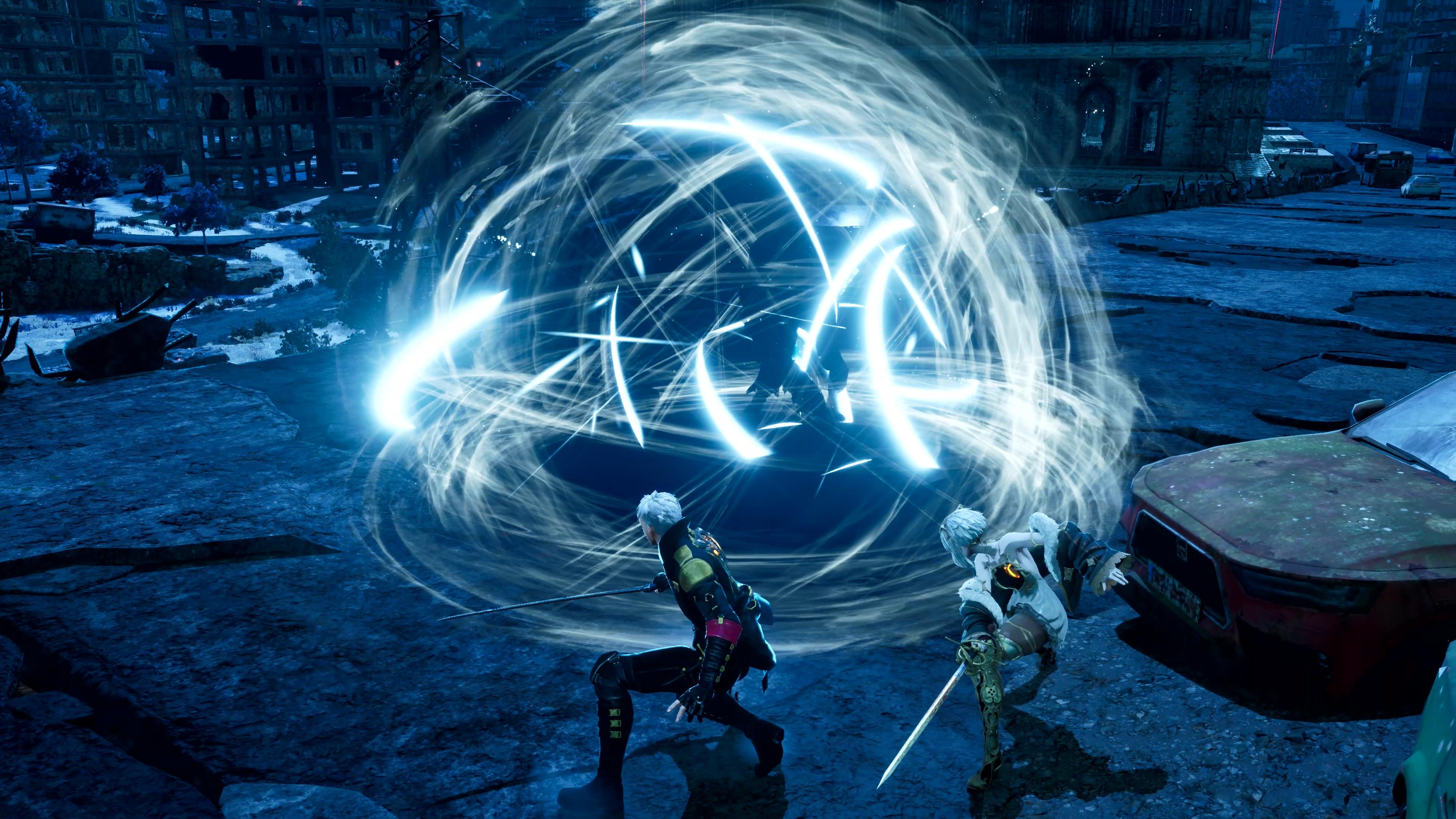
Code Vein did not pretend to flirt with a difficulty as punishing as Souls and this accessible approach undoubtedly contributed to its success. The core of the gameplay still relies on intense combat where the emphasis is on reading enemy movements, managing the timing of your attacks and surviving against opponents who are often stronger than you. From our point of view, the difficulty has clearly been increased, while strengthening strategic decision-making, however a handful of game mechanics make our lives easier. First of all, we have the “Bound Gifts”, beneficial effects that grant advantages in combat and exploration and whose nature depends on the partner.
The life gauge is now divided into two distinct entities: your own health and the immortality of your partner. As long as the latter is intact, you benefit from your linked Gift. However, once exhausted, this bonus disappears. On the other hand, in the event of death, the “Life Offering” of your returning partner can save you from certain death. A valuable safety net, but far from being abusive: after its activation, the companion becomes temporarily inactive, and above all, the recharge time of the Offering increases with each use. An intelligent mechanism which avoids any imbalance and forces us to think before systematically relying on this second chance.
Where Code Vein II What really impresses is the depth and consistency of its customization system, much more accomplished than in the first opus. Without going into a deluge of technical details, it is obvious that the game takes into account an impressive quantity of parameters, offering an almost dizzying freedom to lovers of tailor-made builds. However, those who prefer a more direct and intuitive approach will be able to get by without diving headfirst into the most advanced optimization.
Concretely, each weapon is attached to a specific type (axe, sword, double blades, etc.) and has unique abilities called “formas”. These can be offensive, defensive or magic-oriented, and considerably enrich the fights in addition to classic actions (light and heavy attacks, dodges and parries). Their use is based on the management of “ichor”, an essential resource that is regained by draining the blood of enemies via the use of “the Cage”, a special weapon that can take, among other things, the form of a gauntlet or a scythe depending on the equipment.
In summary, the gameplay of Code Vein II imposes a clear and effective loop: attack, deploy your abilities, drain the enemy to recharge, then return to the attack. An aggressive, fluid and versatile dynamic that encourages experimentation. Bandai Namco clearly puts all the tools in our hands so that everyone can find, and refine, their own style of play. In addition, later in the adventure, it will even be possible to freely choose your partner.
In our veins?
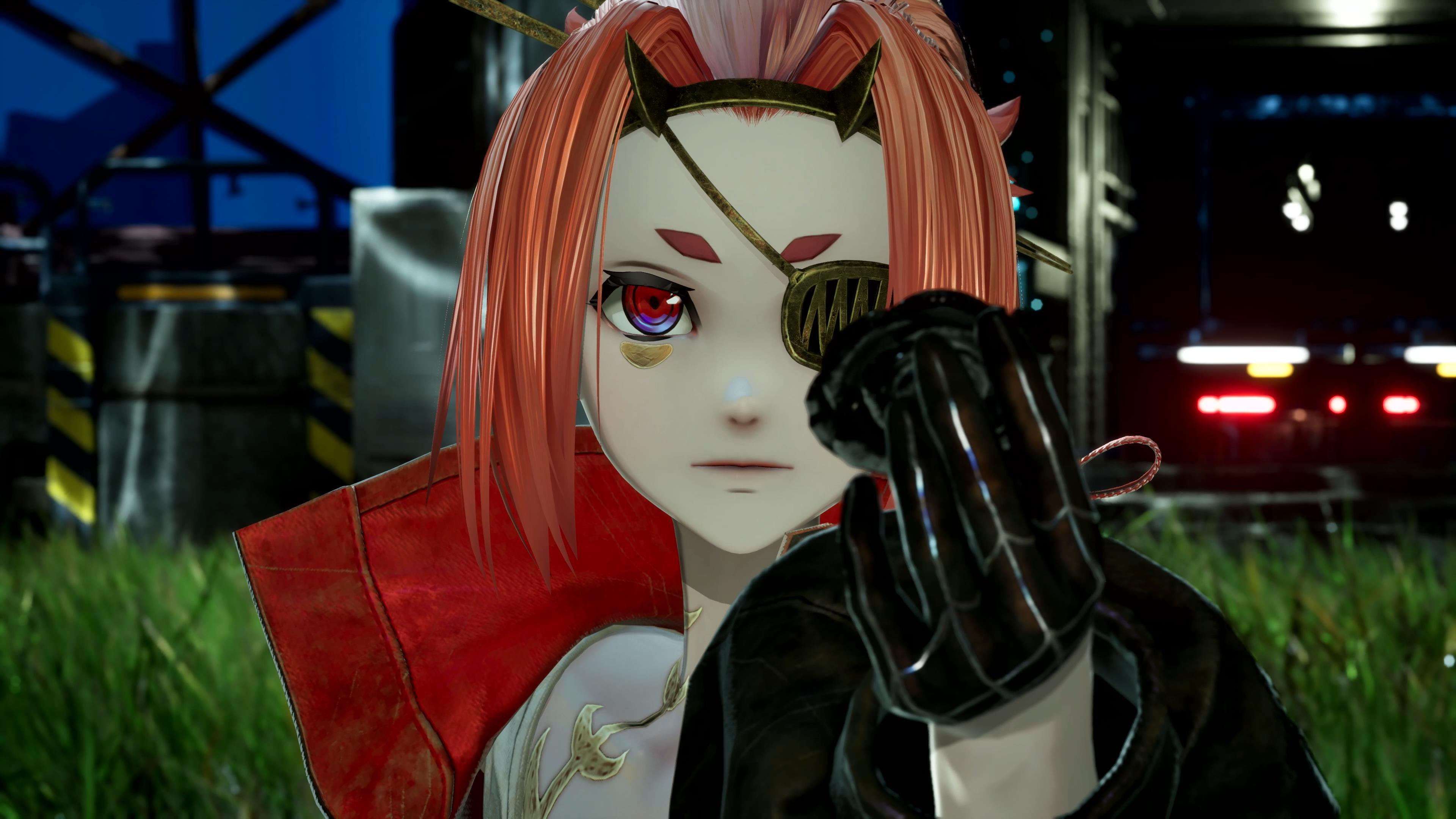
For the moment, it is still difficult to make a definitive statement on the exploration in Code Vein IIbut what we have seen so far is difficult to convince. If the environments are indeed more open than in the first opus, they remain overall very wise, even a little dated, especially when compared to the standards imposed by recent Souls-like. In addition, most of the settings have difficulty expressing themselves with atmospheres that are often too dark. We are therefore waiting to see what the exploration in exterior areas that we have seen in a few trailers will give. We can still welcome a visually successful bestiary for the moment.
In the second part of our session, we were accompanied by Josée, a young ghost with a complex relationship with her sister. Here we had access to a much wider range of mechanics and synergies. And at this level, Code Vein II clearly not doing any favors. The intermediate bosses are already demanding and require real mastery of the combat system, without the possibility of going through force.
Major bosses confirm this trend. We also concluded our session facing one of them, which gave us a hard time and required several attempts before getting over it. The combat is based on a fairly classic structure, with legible and quickly assimilated patterns, but it is distinguished by particularly punitive positioning management. In this specific case, not facing the boss exposed us to acid which was gradually eating away at our health bar.
On the sound level, however, the whole remains quite discreet for the moment. Apart from the boss theme, no composition really struck us during this handling. The Japanese dubbing, however, remains impeccable.
After several hours spent in the company of Code Vein IIdifficult to deny the ambition displayed by Bandai Namco. More than a simple sequel, the title clearly seeks to redefine the identity of the license, even if it means shaking up certain achievements of the first opus. This desire for a reboot is felt as much in the artistic direction, darker and less overtly anime, as in a largely enriched gameplay, more demanding and above all much deeper in its customization possibilities. The duo system, always central, gains in flexibility and strategic interest, while the fights are more technical without ever sinking into unfair brutality. On the other hand, the exploration and certain environmental atmospheres still leave doubt, as they struggle to stand out from the current references of the genre. At this point, Code Vein II therefore appears to be a daring project, sometimes divisive, but undeniably promising.