A dystopian thriller blending science fiction and cosmic horror
The story transports us to 2053, in a future where the planet’s resources are dwindling while unexplained disasters multiply. We play Noah, an investigator belonging to Ancile, a secret organization specializing in occult phenomena. A mission will quickly lead him to explore the mysterious sunken city of R’lyeh, a mythical place associated with the cosmic entity Cthulhu. Accompanied by “Key”, a personal AI assistant integrated into his equipment, the protagonist will have to unravel a series of events whose implications go far beyond the scope of a simple criminal investigation.
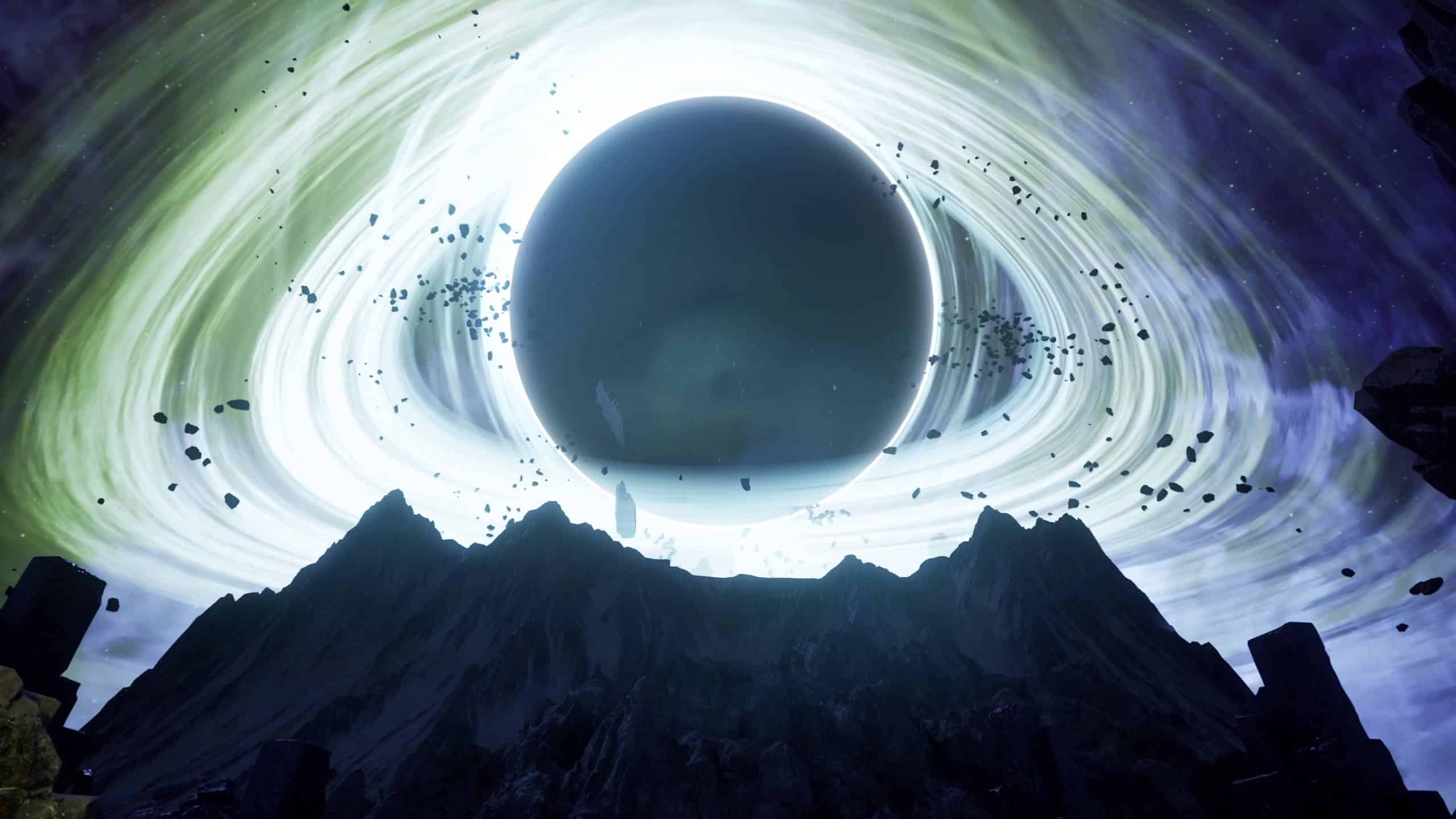
The project is described by its creators as a “horrific investigative thriller” with an emphasis on atmosphere, psychological tension and altered perception of reality. Although we remain in the domain of AA, the use of Unreal Engine 5 makes it possible to offer detailed and massive environments, particularly in areas inspired by the cyclopean and non-Euclidean architecture specific to the Cthulhu mythos.
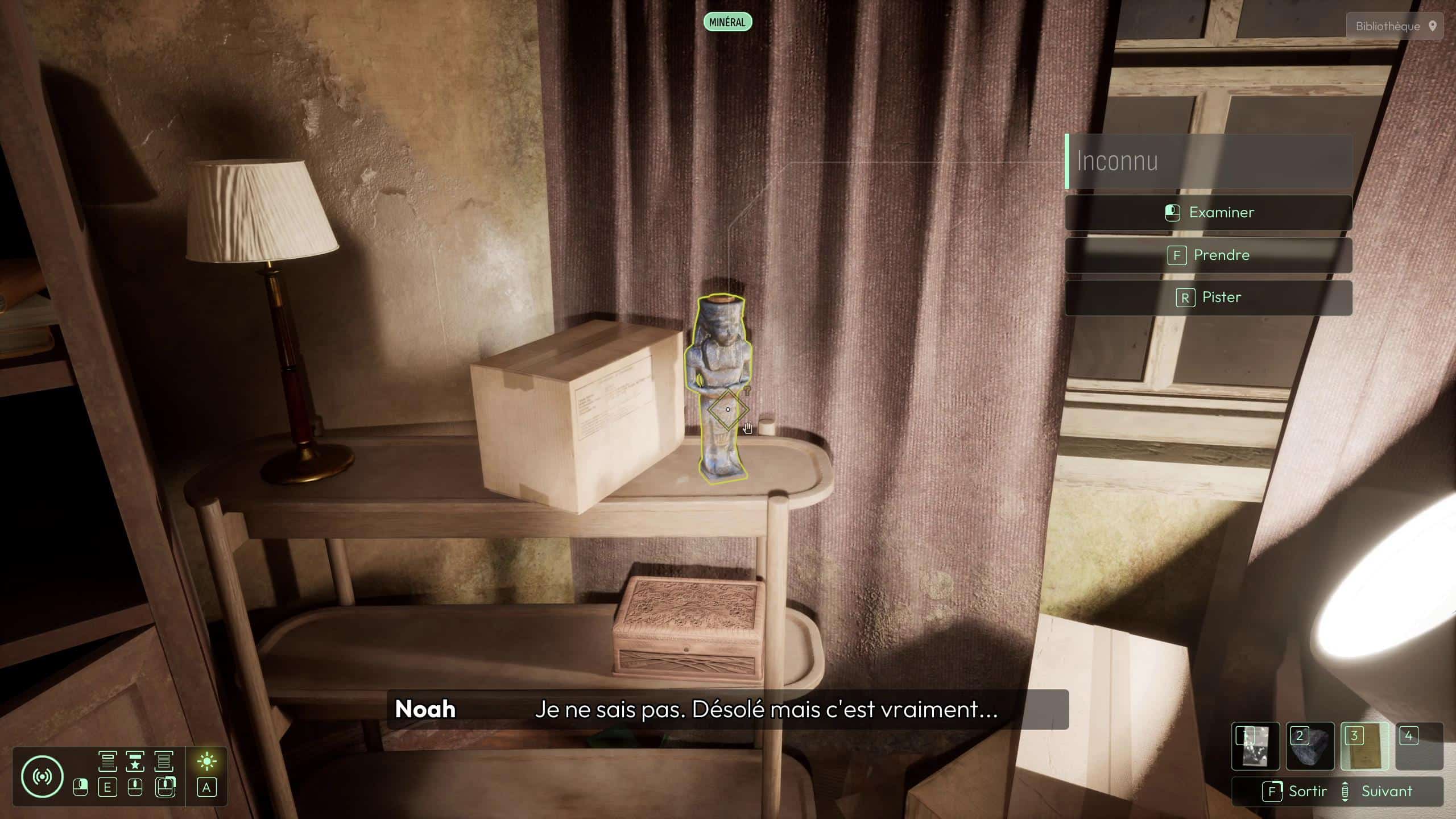
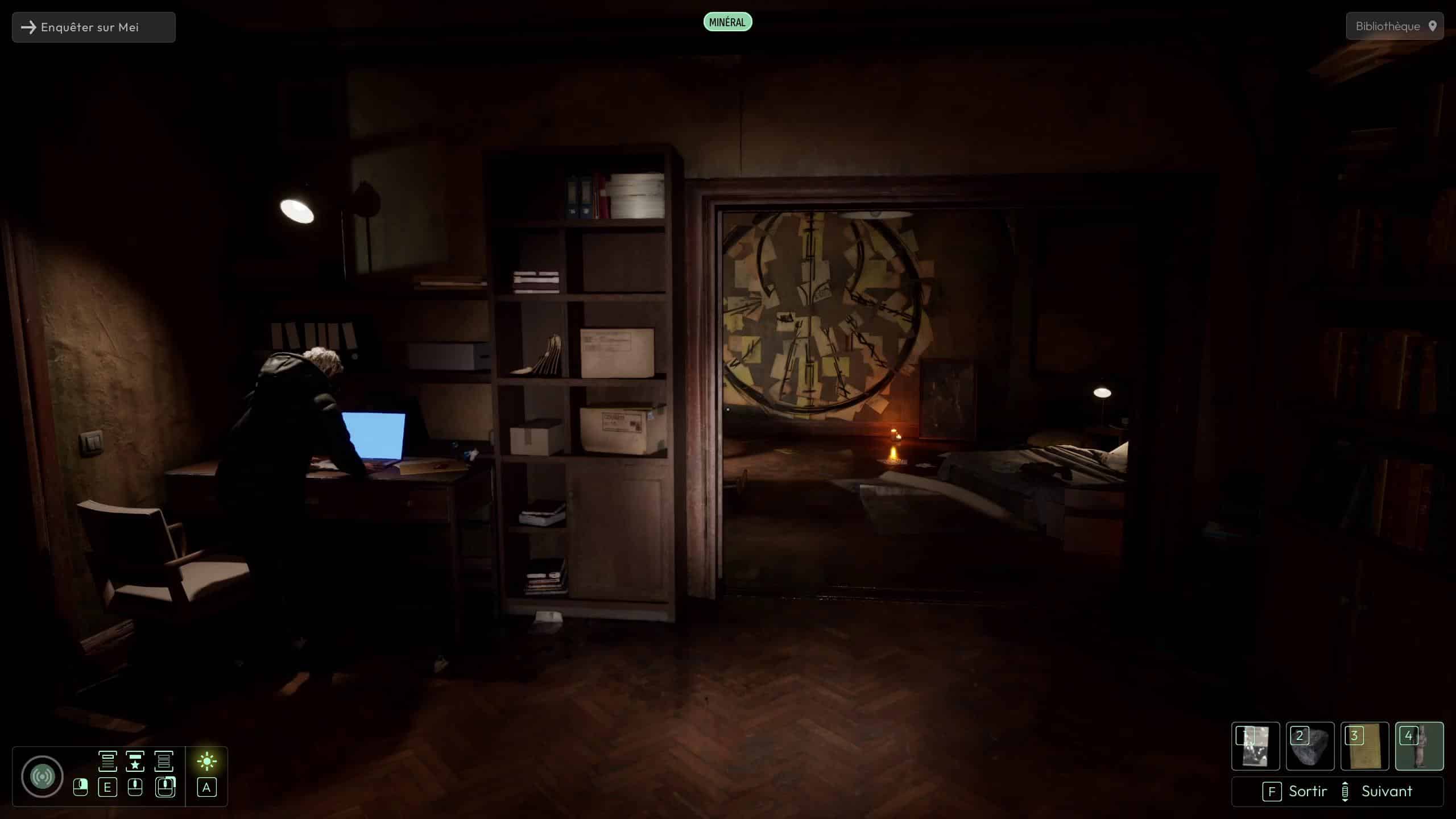
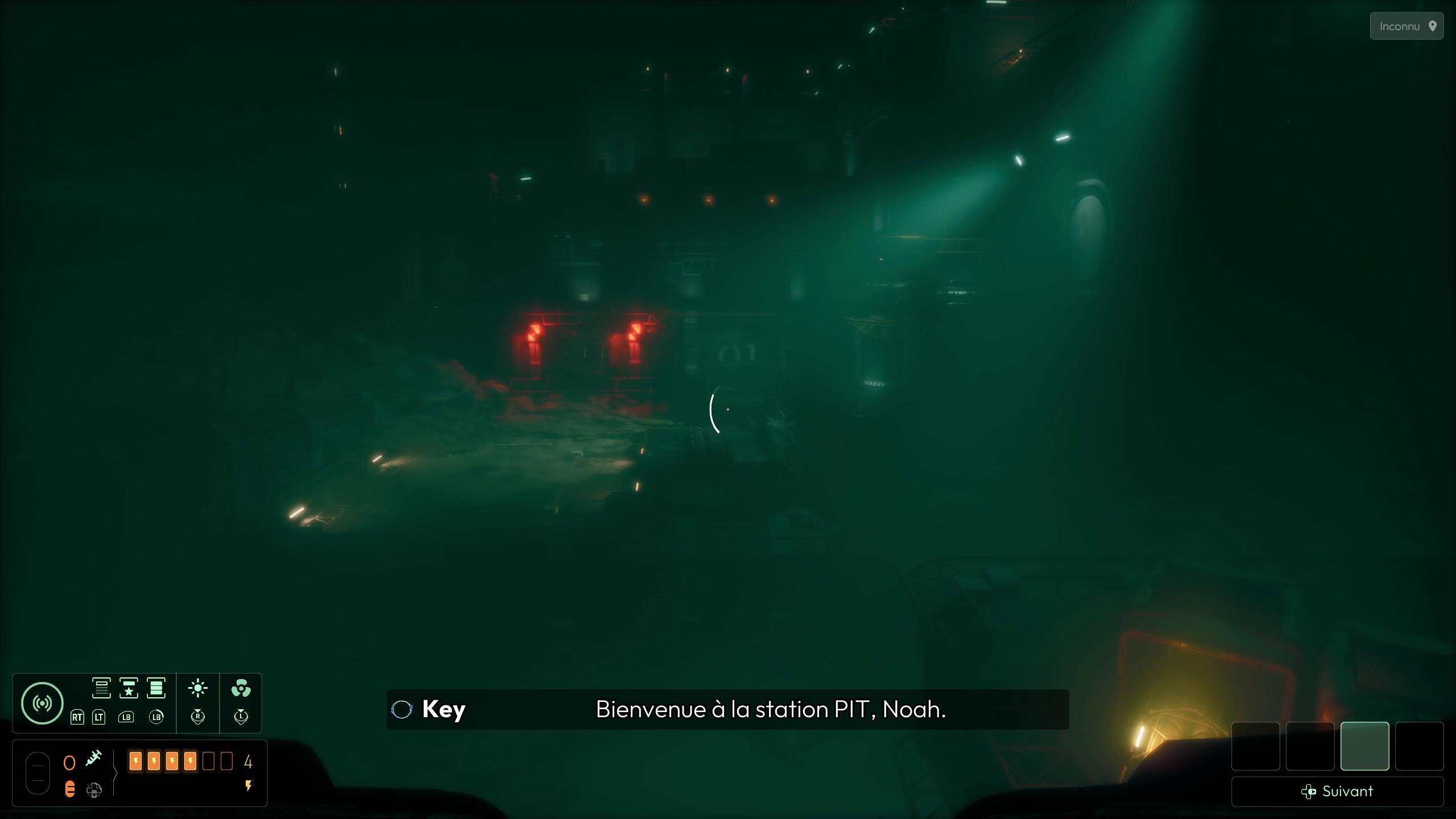
Chapters 1 and 2 have also given us several examples of particularly impressive panoramas in this vein. We can criticize some slightly outdated facial expressions, but the artistic direction as a whole shows promise. Although we did not encounter any major issues during this session, it is important to note that the game is still in development. We will come back to the technical part during the test, once the final version is in our hands, particularly with regard to optimization and performance.
If Big Bad Wolf remains faithful to its narrative DNA, Cthulhu: The Cosmic Abyss marks a notable evolution in its game design philosophy. Where the studio’s previous titles made gameplay a support for the story, the developers explain here that “the story serves the gameplay”an approach that results in much more open and systemic investigations.
Real field work in complete freedom
Concretely, investigations take place in large, freely explorable areas. We analyze clues, we interview characters, we solve environmental puzzles and we reconstruct events along different paths. The protagonist’s technological tools (sonar, frequency analysis, data interfaces) play a central role in gathering information and progressing investigations. He also has an AI assistant directly integrated into his psyche, which provides various information about the game world and certain elements discovered during exploration. A choice which, according to the developers, is fully in line with the Lovecraftian spirit of the work. The stated objective is to give us the feeling of embodying a real detective, capable of drawing our own conclusions rather than following a succession of entirely scripted choices.
These intentions are effectively translated into the game, particularly in the first chapter, where you had to explore several rooms of a house, gather clues, compile information and understand what had happened to the occupant. Chapter 2 takes it up a notch by offering the exploration of a huge underwater base. You must then investigate both the complex and an aquatic maze, equipped with a diving suit. The most striking element remains the real freedom that is left to carry out the investigation as we wish. Even if you sometimes have to go back and forth and rack your brains over certain links or puzzles, Cthulhu: The Cosmic Abyss offers an overall rewarding challenge.
We also specify that we played without the various aids that the game can offer in the options for the less patient. we find the studio perhaps a little too permissive when it comes to clue associations. An interface allows you to navigate between all the collected elements and connect them according to your own deductions, or by inserting them into predefined locations. It is thus possible to try all the combinations, without ever being penalized for one or more successive errors. This tool is not essential, but can become quite chaotic when the number of accumulated clues becomes large.
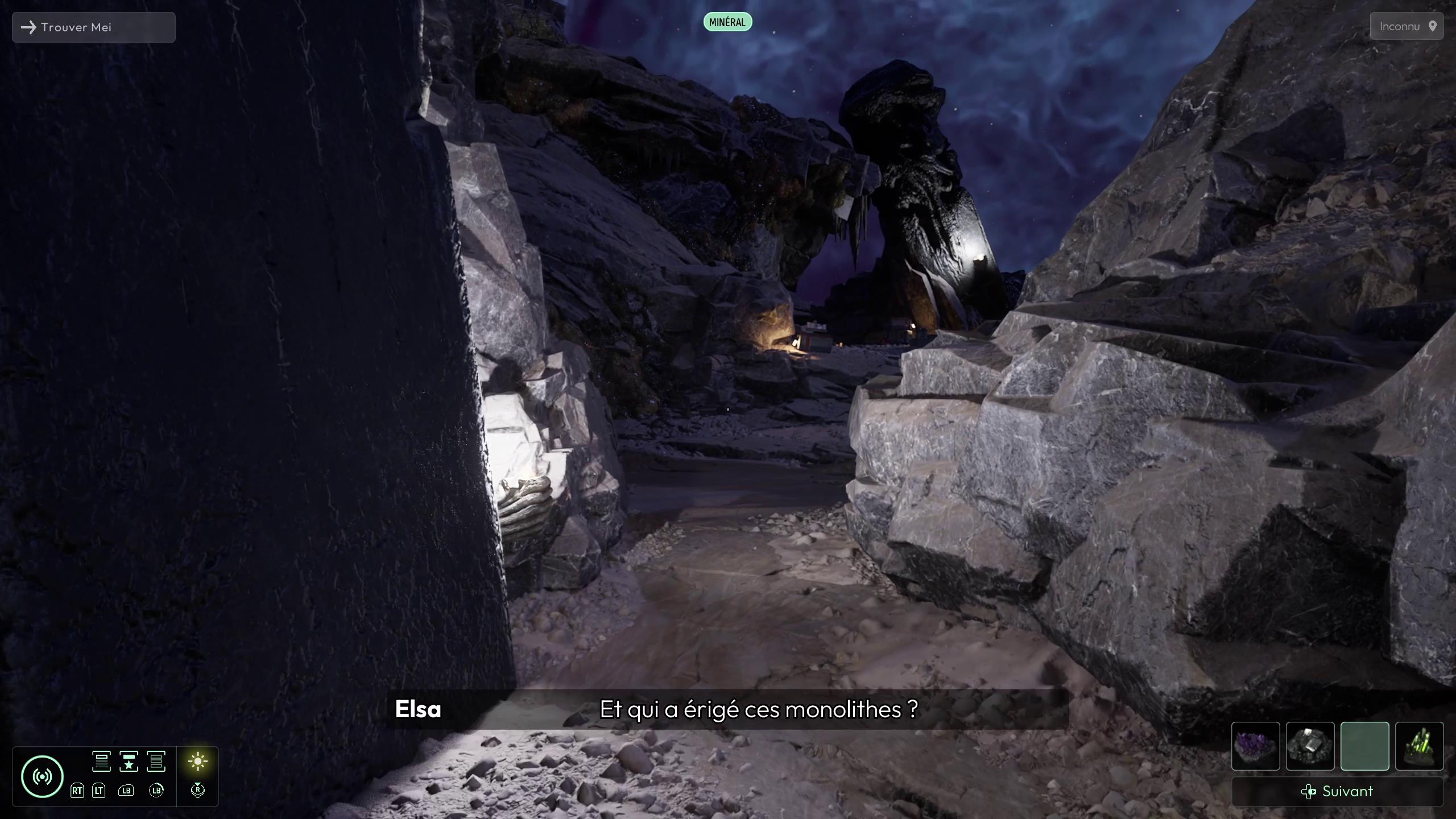
In order to analyze the clues and discover new information, our investigator must expend energy which is represented by a gauge that can be gradually recharged by harvesting nutritious fungal species. Having not yet encountered a shortage at this stage of the adventure, it remains difficult to precisely assess the role and the degree of limitation that this mechanism will impose over time. We also got a glimpse of the upgrade system, which unlocks new skills when discovering strange monoliths. The first two improvements offer a chance to recover energy and extend the range of the sonar. Here again, it is too early to comment on the impact of this system on the gameplay.
An investigation that can drive you crazy
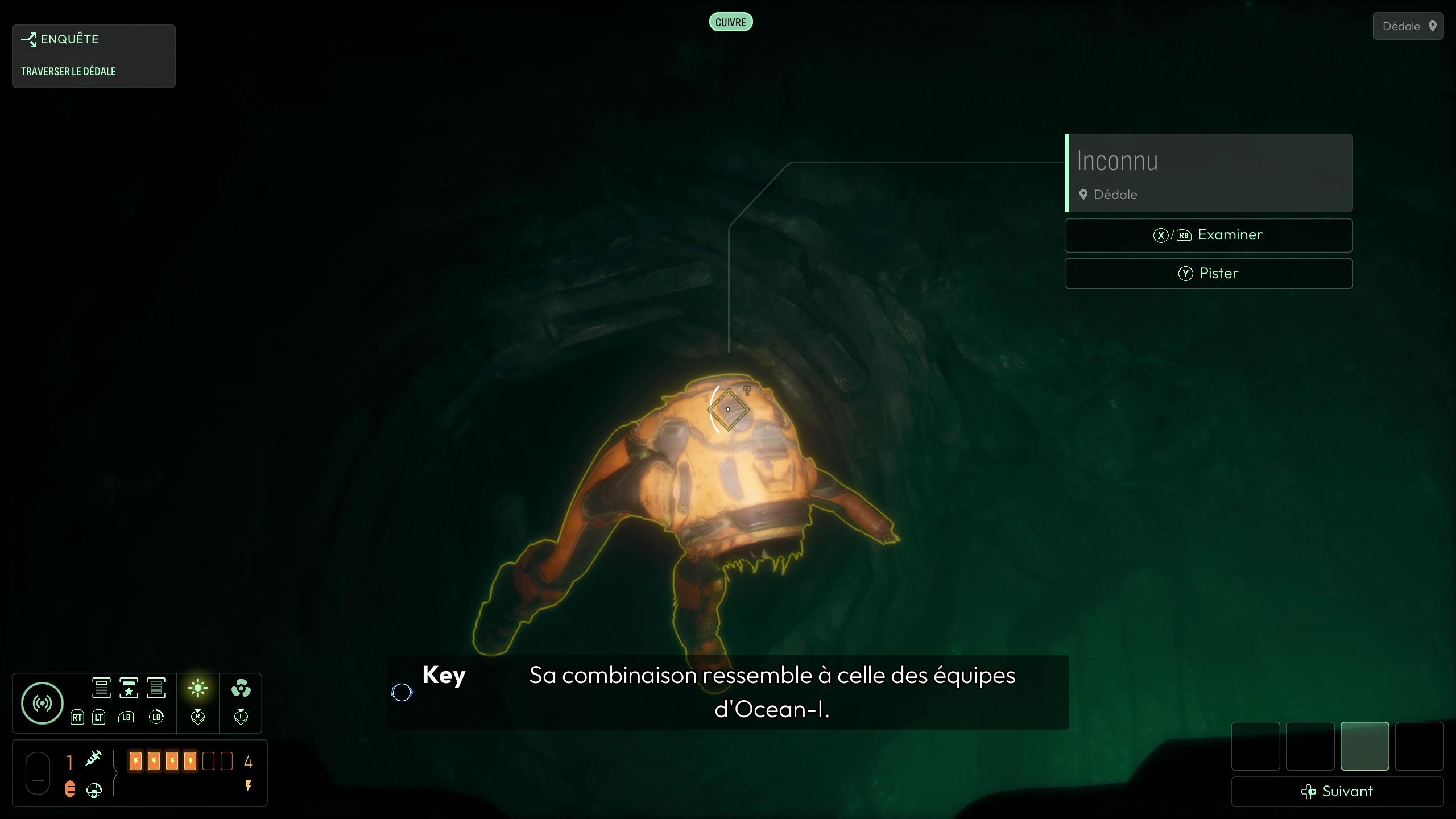
According to the studio, the narrative structure consists of seven chapters, each corresponding to a major phase of the investigation. Depending on the clues discovered and the decisions made, several conclusions can be reached for each case, which includes positive or negative resolutions. The consequences are not only story-related and a bad conclusion can directly affect the mental health of the protagonist. Although we ourselves could not see it, it affects the course of subsequent events and the perception of the world around us. In any case, although this mechanic will also have to be assessed in the future, it remains faithful to the Lovecraftian spirit where knowledge can become a threat.
The announced lifespan varies between 12 and 16 hours, depending on the degree of exploration and the different narrative branches taken. A relatively compact format which seems consistent with the studio’s desire to offer a dense experience. The format should delight fans of reasonably long and intense experiences. Finally, the title will only offer dialogues in English and texts in French. We can also underline the generally convincing quality of the acting which is supported by a good mastery of the dialogues, despite an AI that is sometimes a little too talkative.
With these first two chapters, Cthulhu: The Cosmic Abyss suggests a solid proposition which could well mark a new stage in the evolution of Big Bad Wolf. More open in its structure, more demanding in its investigations and carried by a particularly successful atmosphere, the title seems to manage to find an interesting balance between narration and gameplay, while remaining faithful to Lovecraft’s work. Certain mechanics will still have to prove themselves over time, particularly in terms of progression, index management and the real impact of choices, but the whole thing already appears promising enough to keep an eye on it this year.